
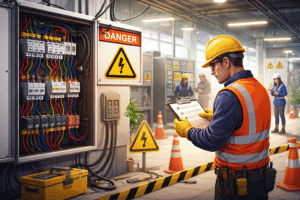
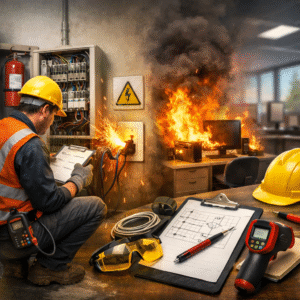
Electrical compliance inspections play a critical role in maintaining safe and reliable commercial and industrial environments. Many businesses assume that if the power is working, the system must be safe. However, compliance inspections often reveal underlying issues that are not immediately visible during daily operations.
Understanding the most common issues found during an electrical compliance inspection helps businesses recognise warning signs early and reduce the risk of safety incidents, downtime and regulatory concerns.
Below are the issues most frequently identified during electrical compliance inspections across commercial and industrial sites.
Why Electrical Compliance Inspections Matter
Electrical systems evolve over time. Equipment is added, layouts change and operating demands increase. Without proper review, systems that were once adequate may no longer meet safety expectations or operational needs.
An electrical compliance inspection identifies risks before they escalate and provides structured recommendations to support safer, more reliable performance.
1. Overloaded Circuits
One of the most common findings during compliance inspections is circuit overload.
As businesses grow, new equipment is often connected to existing circuits without reviewing overall load capacity. Overloaded circuits generate excessive heat and increase the risk of fire or equipment damage.
Signs of Circuit Overload
- Frequent breaker tripping
- Warm switchboard panels
- Flickering lights during equipment startup
- Discoloured terminals
Left unaddressed, overloaded circuits can lead to serious operational disruptions.
2. Ageing or Outdated Switchboards
Many commercial buildings operate with switchboards that are decades old. While they may still function, they may not meet current safety or operational expectations.
Common Switchboard Issues
- Deteriorating insulation
- Limited spare capacity
- Outdated protection devices
- Signs of overheating
Ageing infrastructure increases risk and reduces flexibility for future expansion.
3. Loose or Poor Electrical Connections
Loose terminals and poorly secured connections are frequently identified during inspections. These issues create resistance, which leads to heat buildup.
Over time, excessive heat can damage components and increase fire risk.
Thermal imaging often reveals connection problems that are not visible to the naked eye.
4. Inadequate Circuit Protection
Protection devices such as circuit breakers and safety switches must be correctly rated and coordinated.
During electrical compliance inspections, inspectors often find:
- Incorrect breaker sizing
- Protection devices that do not match load requirements
- Inconsistent protection coordination
Improper protection can prevent systems from disconnecting during faults, increasing risk of overheating or equipment failure.
5. Poor Labelling and Documentation
Clear labelling is essential for safe maintenance and emergency response. However, compliance inspections frequently reveal:
- Unlabelled circuits
- Inaccurate panel directories
- Missing or outdated documentation
Poor labelling creates confusion during troubleshooting and increases risk during emergencies.
6. Insufficient Clearance Around Electrical Equipment
Electrical panels and switchboards require adequate working space for safe operation and maintenance.
Compliance inspections often identify:
- Storage placed in front of switchboards
- Restricted access pathways
- Equipment blocking required clearance areas
Restricted access can delay emergency response and increase safety hazards.
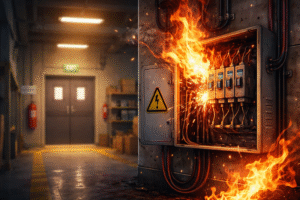
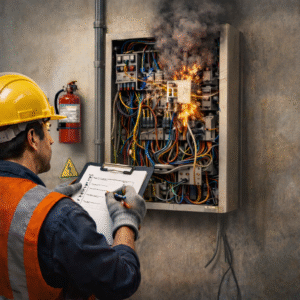
7. Evidence of Overheating
Heat is a primary warning sign of electrical risk. During inspections, signs of overheating may include:
- Burn marks
- Discoloured cabling
- Warped insulation
- Hot spots detected through thermal imaging
Overheating is often caused by loose connections, overload or ageing components.
8. Unauthorised Modifications
Over time, electrical systems may be altered without full documentation or professional oversight.
Common examples include:
- Improvised wiring extensions
- Temporary connections made permanent
- Added circuits without load review
These modifications often introduce compliance gaps and safety concerns.
9. Inadequate Earthing or Bonding
Proper earthing is critical for safety. Compliance inspections sometimes uncover deficiencies in grounding systems, which can increase shock risk and equipment vulnerability.
10. Lack of Preventive Maintenance
Many compliance issues stem from insufficient ongoing maintenance.
Without regular inspections, minor problems accumulate and eventually require urgent correction. Preventive maintenance reduces the likelihood of recurring compliance failures.
How These Issues Impact Businesses
The issues identified during electrical compliance inspections can lead to:
- Increased fire risk
- Unexpected equipment failure
- Downtime and operational disruption
- Insurance complications
- Regulatory penalties
- Increased long-term costs
Many of these problems are manageable when identified early.
The Value of Proactive Compliance Inspections
Regular electrical compliance inspections allow businesses to:
- Identify hazards before incidents occur
- Prioritise corrective actions
- Budget for upgrades strategically
- Maintain stronger compliance records
- Improve long-term system reliability
Proactive inspection is significantly more cost-effective than reactive emergency repair.
How ASJ Electrical Solutions Supports Compliance
At ASJ Electrical Solutions, electrical compliance inspections focus on identifying real-world risks in commercial and industrial environments. Our assessments combine visual inspection, load review and thermal analysis to detect early warning signs and provide structured recommendations.
By addressing common compliance issues early, businesses gain improved safety, clearer documentation and greater operational confidence.
Frequently Asked Questions
What is the most common issue found during an electrical compliance inspection?
Overloaded circuits and ageing switchboards are among the most frequent findings.
Can compliance inspections prevent electrical fires?
Yes. Many fire risks stem from overheating and overload, which are often detected during inspections.
How often should a business schedule an electrical compliance inspection?
Frequency depends on site size, age and load demand. High-load industrial sites benefit from regular review.
Does a compliance inspection include thermal imaging?
In many cases, thermal imaging is used to identify heat-related risks not visible during visual inspection.
Are small commercial sites at risk too?
Yes. Even smaller facilities can develop overload and compliance issues over time.
Conclusion
Electrical compliance inspections frequently uncover issues that businesses are unaware of, from overloaded circuits and ageing switchboards to poor documentation and overheating components. These problems often develop gradually but can have serious consequences if ignored.
By understanding the common issues found during electrical compliance inspections, businesses can take proactive steps to strengthen safety, reduce liability and improve operational reliability.
Partnering with experienced professionals such as ASJ Electrical Solutions ensures that compliance reviews are thorough, practical and aligned with real-world operational demands.