
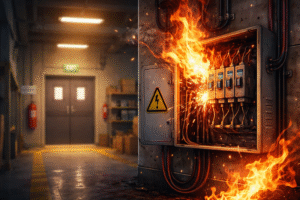
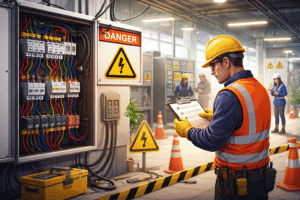
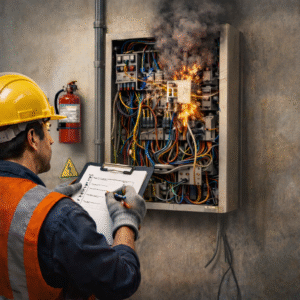
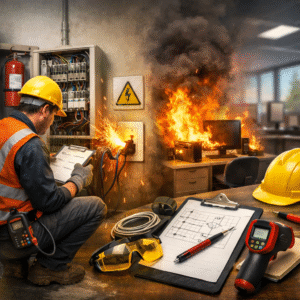
Electrical systems are essential to the daily operation of commercial and industrial facilities across Queensland. From powering machinery and refrigeration to supporting lighting, HVAC systems and data infrastructure, electricity is at the core of business continuity. However, when electrical systems are not properly monitored and maintained, they can become one of the most significant fire risks within a workplace.
Electrical fires rarely occur without warning. In most cases, they are the result of gradual deterioration, excessive heat, overload conditions or inadequate protection. These warning signs often go unnoticed until a serious incident occurs.
Electrical fire risk management provides Queensland businesses with a structured approach to identifying hazards early, reducing ignition risks and strengthening workplace safety. Rather than waiting for a fault to cause damage, businesses can take proactive steps to protect people, property and operations.
Why Electrical Fire Risk Is a Serious Issue in Queensland
Queensland businesses operate in conditions that can intensify electrical stress. High temperatures, humidity, coastal exposure and industrial load demands all contribute to wear on electrical systems.
Common environmental and operational factors in Queensland include:
- Continuous equipment operation in industrial facilities
- High ambient temperatures affecting switchboards
- Expansion of electrical loads over time
- Ageing infrastructure in commercial buildings
- Limited ventilation in plant rooms and electrical enclosures
Heat is the primary trigger for electrical fire. When electrical components operate under stress for prolonged periods, heat builds up. Without proper monitoring, this heat can lead to insulation breakdown, arcing or ignition.
For commercial and industrial businesses, the consequences of electrical fire can include injury, extended downtime, major repair costs and reputational damage.
What Is Electrical Fire Risk Management?
Electrical fire risk management is a proactive system of assessment, monitoring and corrective action designed to reduce the likelihood of electrical fires.
It involves:
- Identifying potential ignition sources
- Evaluating electrical load capacity
- Detecting overheating components
- Reviewing protection device suitability
- Ensuring safe installation standards
- Implementing preventive maintenance strategies
The goal is to reduce risk before an incident occurs rather than responding after damage has already happened.
The Most Common Causes of Electrical Fires in Workplaces
Understanding common causes helps businesses recognise where vulnerabilities may exist.
Overloaded Circuits
As businesses expand, additional equipment is often connected to existing circuits without reassessing capacity. Overloaded circuits generate excessive heat and strain protection devices.
Signs of overload include:
- Repeated breaker tripping
- Warm or discoloured switchboard panels
- Flickering lights when equipment starts
Unchecked overload conditions increase fire risk significantly.
Loose or Deteriorated Connections
Loose terminals create electrical resistance. Resistance produces heat, which accumulates over time. This heat can ignite nearby materials within a switchboard.
These issues are often invisible without thermal imaging or detailed inspection.
Ageing Switchboards and Components
Older electrical panels may not support modern operational demands. Insulation can degrade, protection devices may be outdated and spare capacity may be limited.
Ageing infrastructure is a common contributor to electrical fire risk in commercial buildings.
Inadequate Circuit Protection
Circuit breakers and protective devices must be properly rated and coordinated. Incorrect sizing can prevent circuits from disconnecting during fault conditions.
When protection fails, overheating continues unchecked, increasing ignition potential.
Poor Ventilation Around Electrical Equipment
Electrical panels require adequate airflow to dissipate heat. Storage placed in front of switchboards or enclosed plant rooms with limited ventilation can trap heat and accelerate component failure.
Core Components of Electrical Fire Risk Management
Effective electrical fire risk management for Queensland businesses involves several structured elements.
1. Comprehensive Electrical Fire Risk Assessments
A fire risk assessment focuses specifically on identifying ignition hazards within electrical systems.
This includes:
- Inspection of switchboards
- Load capacity evaluation
- Identification of overheating
- Review of protection devices
- Detection of unsafe modifications
A structured report allows businesses to prioritise corrective actions logically.
2. Thermal Imaging for Early Heat Detection
Thermal imaging is one of the most effective tools for managing electrical fire risk.
Because heat is often the first warning sign of electrical failure, thermal imaging helps detect:
- High-resistance connections
- Overloaded circuits
- Stressed breakers
- Imbalanced phases
Importantly, thermal imaging can be conducted while systems remain operational, allowing detection under real load conditions.
3. Load Monitoring and Power Analysis
Understanding how electricity is consumed across a site is critical to fire risk management.
Load monitoring helps:
- Identify peak demand stress
- Detect imbalance between phases
- Highlight circuits operating near capacity
- Prevent overload-related heating
As Queensland businesses grow, periodic load review ensures infrastructure remains suitable for demand.
4. Verification of Protection Devices
Protection devices must disconnect circuits quickly during fault conditions.
Electrical fire risk management includes:
- Confirming breaker ratings
- Reviewing protection coordination
- Identifying outdated devices
- Ensuring correct installation
Proper protection is one of the strongest barriers against fire escalation.
5. Preventive Maintenance Programs
Reactive maintenance increases fire risk because issues are only addressed after failure occurs.
Preventive maintenance:
- Identifies deterioration early
- Reduces emergency repairs
- Improves reliability
- Strengthens safety documentation
Scheduled inspections reduce the chance of surprise incidents.
How Electrical Fire Risk Management Improves Workplace Safety?
Electrical fire risk management directly contributes to safer workplaces.
Reduced Ignition Sources
By identifying overheating and overload conditions early, ignition risks are minimised.
Improved Emergency Preparedness
Clear labelling and proper installation improve response time if an issue occurs.
Enhanced Staff Confidence
Employees feel safer when systems are visibly maintained and monitored.
Lower Likelihood of Evacuation Events
Preventing fire reduces the risk of emergency disruptions and injuries.
Financial and Operational Benefits
Beyond safety, structured electrical fire risk management delivers measurable business benefits.
Reduced Downtime
Early intervention prevents unexpected shutdowns caused by electrical faults.
Lower Repair Costs
Fixing minor issues costs significantly less than recovering from fire damage.
Protection of Equipment
Stable electrical supply reduces stress on machinery and extends lifespan.
Stronger Insurance Position
Demonstrating proactive risk management supports insurance compliance and claims.
Improved Budget Forecasting
Planned upgrades are more manageable than emergency capital expenditure.
When Should Queensland Businesses Review Fire Risk?
Electrical fire risk management should be reviewed:
- During expansion or renovation
- When adding high-load equipment
- If switchboards show signs of heat
- After repeated circuit interruptions
- When infrastructure is ageing
- Before major compliance audits
Regular review prevents small risks from developing into serious hazards.
Industries That Benefit Most in Queensland
Electrical fire risk management is critical for:
- Industrial manufacturing sites
- Warehouses and distribution centres
- Food processing facilities
- Commercial office buildings
- Retail complexes
- Hospitality venues
- Multi-tenant industrial properties
In high-load environments, even minor electrical faults can have significant consequences.
The Role of Professional Electrical Consultants
Electrical fire risk management requires technical expertise and experience with commercial and industrial systems.
Professional electrical consultants support Queensland businesses by:
- Conducting detailed risk assessments
- Using thermal imaging technology
- Reviewing load conditions
- Prioritising corrective actions
- Providing structured reporting
This professional oversight ensures fire risk is managed systematically rather than reactively.
ASJ Electrical Solutions works with Queensland businesses to strengthen electrical fire risk management through inspections, monitoring and practical compliance-focused guidance that supports safer and more reliable operations.
Frequently Asked Questions
What is electrical fire risk management?
It is a proactive process of identifying and reducing fire hazards within electrical systems through inspection, monitoring and maintenance.
How often should fire risk assessments be conducted?
Frequency depends on load demand and infrastructure age. High-load industrial sites typically require more regular review.
Does thermal imaging prevent electrical fires?
Thermal imaging detects abnormal heat early, allowing corrective action before ignition occurs.
Is electrical fire risk management expensive?
Preventive risk management is typically far less expensive than emergency repairs or fire recovery.
Can smaller commercial sites benefit from fire risk management?
Yes. Any business with electrical infrastructure can develop fire risk over time.
Conclusion
Electrical fire risk management is not optional for Queensland businesses operating in commercial and industrial environments. High temperatures, increasing load demand and ageing infrastructure create conditions where fire risk can develop quietly over time.
At ASJ Electrical Solutions, we support commercial and industrial clients across Queensland with practical electrical fire risk assessments, thermal imaging and compliance-focused inspections. Our experienced electrical consultants provide clear reporting and actionable recommendations that help businesses reduce risk, stay compliant and maintain reliable operations.