
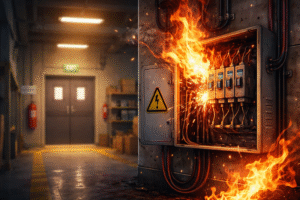
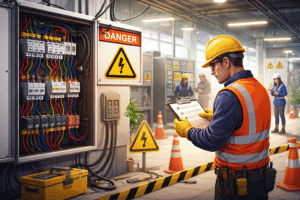
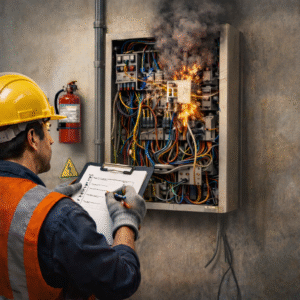
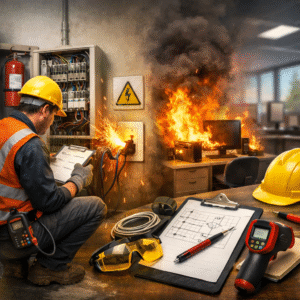
Workplace safety is not limited to visible hazards such as slips, falls or machinery risks. One of the most serious and often overlooked dangers in commercial and industrial environments is electrical failure. Electrical systems power lighting, production equipment, HVAC, data systems and essential infrastructure. When these systems are not properly inspected and maintained, they can become a significant safety threat.
Electrical compliance inspections play a critical role in identifying hidden risks before they escalate into injury, fire or operational disruption. For Queensland businesses operating in high-load and high-demand environments, regular compliance inspections are not simply a regulatory requirement. They are a fundamental part of protecting employees, assets and long-term business continuity.
Understanding why electrical compliance inspections are critical for workplace safety helps organisations take a proactive approach rather than reacting after an incident occurs.
What Is an Electrical Compliance Inspection?
An electrical compliance inspection is a structured review of a workplace’s electrical systems to ensure they meet safety standards and operational requirements.
It typically includes:
- Inspection of switchboards and distribution panels
- Review of circuit protection devices
- Assessment of wiring condition
- Identification of overload conditions
- Verification of proper installation practices
- Evaluation of labelling and documentation
The purpose of the inspection is not only to identify faults but to confirm that the overall electrical infrastructure is safe and suitable for its intended use.
The Link Between Electrical Compliance and Workplace Safety
Electrical systems operate continuously in most workplaces. Over time, even minor defects can evolve into serious hazards. Without regular compliance inspections, these issues may remain undetected until a failure occurs.
Electrical compliance inspections directly support workplace safety by:
- Identifying fire hazards early
- Detecting overload conditions
- Preventing electrical shock risks
- Ensuring protection devices function correctly
- Supporting safe maintenance practices
Proactive inspection reduces the likelihood of dangerous incidents.
Common Workplace Electrical Hazards Identified During Compliance Inspections
Many electrical hazards are not immediately visible. Compliance inspections frequently uncover issues such as:
Overloaded Circuits
As workplaces expand or add equipment, circuits may exceed safe load limits. Overload generates excessive heat and increases fire risk.
Frequent breaker tripping is often an early warning sign.
Loose or Deteriorating Connections
Loose terminals create resistance, which produces heat. Over time, this heat can damage insulation and create ignition conditions.
These problems are often detected through thermal imaging or detailed inspection.
Ageing Switchboards
Older electrical panels may not support current operational demands. Degraded components increase the risk of overheating and failure.
Inadequate Circuit Protection
Incorrectly rated circuit breakers or poorly coordinated protection devices can prevent proper disconnection during fault conditions.
This increases the risk of shock and fire.
Poor Labelling and Documentation
Inaccurate or missing labelling can delay response during emergencies and increase risk during maintenance work.
How Electrical Compliance Inspections Prevent Workplace Fires
Electrical fires are a leading cause of property damage in commercial and industrial environments. Most electrical fires result from overheating, overload or failure of protective devices.
Compliance inspections help prevent fires by:
- Identifying heat buildup before ignition
- Confirming circuits are not overloaded
- Verifying proper protection device operation
- Detecting unsafe modifications
By addressing these risks early, workplaces significantly reduce ignition potential.
Protecting Employees and Visitors
Workplaces often contain staff, contractors, customers and visitors. Electrical incidents can lead to serious injury, smoke inhalation or evacuation emergencies.
Electrical compliance inspections strengthen occupant protection by:
- Reducing exposure to live fault conditions
- Ensuring safe switchboard access
- Preventing sudden electrical failures
- Supporting emergency preparedness
Safe infrastructure builds confidence across the workplace.
Reducing Downtime and Operational Risk
Workplace safety is closely connected to operational stability. Electrical failures can halt production, disrupt services and create unsafe working conditions.
Compliance inspections reduce downtime by:
- Identifying weak points before failure
- Preventing unexpected shutdowns
- Supporting preventive maintenance planning
- Improving system reliability
Stable electrical systems create safer working environments.
Supporting Legal and Regulatory Responsibilities
Businesses have a duty to maintain safe working environments. Electrical compliance inspections help demonstrate that this responsibility is being met.
Documented inspections provide evidence of:
- Proactive hazard management
- Ongoing system monitoring
- Compliance with safety obligations
- Structured risk reduction efforts
In the event of an incident, documented inspections can significantly reduce liability exposure.
Electrical Compliance Inspections as Part of Risk Management Strategy
Electrical compliance inspections should not be viewed as isolated events. They form part of a broader workplace risk management strategy.
When integrated into safety programs, inspections help:
- Prioritise corrective actions
- Allocate maintenance budgets effectively
- Support long-term infrastructure planning
- Reduce reactive emergency repairs
Structured inspection schedules create consistency and reduce risk.
Industries Where Compliance Inspections Are Especially Critical
Electrical compliance inspections are particularly important in:
- Industrial manufacturing sites
- Warehouses and logistics centres
- Processing plants
- Commercial office buildings
- Retail complexes
- Hospitality venues
- Multi-tenant commercial properties
In these environments, high load demand and continuous operation increase electrical stress.
The Role of Thermal Imaging in Workplace Safety
Thermal imaging is a valuable tool often used during compliance inspections.
It helps detect:
- Hot spots within switchboards
- High-resistance connections
- Imbalanced electrical loads
- Components operating under stress
Because heat is an early warning sign of electrical failure, thermal imaging enhances fire prevention and strengthens workplace safety.
When Should Workplaces Conduct Electrical Compliance Inspections?
Businesses should consider compliance inspections:
- On a scheduled preventive basis
- After equipment upgrades
- During expansion projects
- When infrastructure is ageing
- If repeated electrical faults occur
- Before regulatory audits
Waiting for visible signs of failure increases exposure to risk.
Long-Term Benefits of Regular Compliance Inspections
Beyond immediate safety improvements, regular electrical compliance inspections provide long-term advantages:
Improved Infrastructure Lifespan
Early intervention reduces stress on components and extends service life.
Lower Maintenance Costs
Addressing minor issues early prevents major repair expenses.
Stronger Safety Culture
Visible commitment to electrical safety strengthens workplace standards.
Better Planning and Budgeting
Clear reports support informed capital expenditure decisions.
Frequently Asked Questions
How often should electrical compliance inspections be conducted?
Frequency depends on load demand, infrastructure age and industry type. High-risk environments benefit from more regular assessment.
Do compliance inspections disrupt operations?
Many inspections can be conducted with minimal disruption, depending on scope.
Can small commercial workplaces benefit from compliance inspections?
Yes. Any workplace with electrical infrastructure can develop compliance risks over time.
Are compliance inspections different from safety inspections?
Compliance inspections include safety evaluation but also review regulatory alignment and documentation.
Can compliance inspections prevent workplace accidents?
Yes. Identifying hazards early significantly reduces the likelihood of shock, fire or equipment failure.
Conclusion
Electrical compliance inspections are critical for workplace safety because they identify hazards that are often hidden from daily view. Overloaded circuits, ageing infrastructure, loose connections and inadequate protection devices can quietly increase risk over time.
By conducting regular electrical compliance inspections, businesses strengthen fire prevention, protect employees, reduce downtime and demonstrate responsible safety management. Rather than waiting for an incident to expose weaknesses, proactive inspection allows workplaces to maintain control over electrical risk.
ASJ Electrical Solutions works with Queensland businesses to deliver structured electrical compliance inspections that focus on real-world risk reduction. Through detailed assessments, clear reporting and practical recommendations, our team helps organisations stay compliant, minimise hazards and maintain reliable electrical performance.