
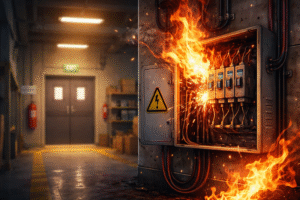
Most electrical problems don’t arrive with smoke or flashing alarms. In commercial buildings, the systems that power everything, lights, machinery, HVAC, and IT, run silently behind walls and above ceilings. On the surface, everything seems fine. But hidden inside, tiny issues can grow into major risks.
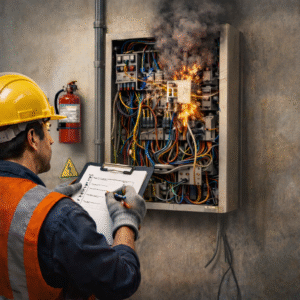
A breaker trips occasionally, a light flickers, or a switchboard feels slightly warm. Staff notice it, shrug, and move on. These are not minor inconveniences. They are early warnings that something is operating outside safe limits. A breaker that keeps tripping is protecting equipment from overload. A warm switchboard signals heat building inside terminals. Flickering lights often point to a voltage imbalance.
Ignoring these signs isn’t harmless. Electrical faults progress silently. One overlooked outlet or expired license can spiral into emergency repairs, lost productivity, and regulatory penalties. Equipment can be damaged, downtime can halt operations, and repair bills can multiply quickly.
This is not just theory; it happens in real life. Take Cool Time Industries Pty Ltd, a Queensland air-conditioning company. They were installing new units at a veterinary clinic when an electrical task required a licensed worker. The assigned worker’s electrical licence had expired years earlier, and the site remained connected to power. Safety protocols were not fully followed.
Tragically, the worker was electrocuted on-site. The company faced a $150,000 fine, reputational damage, and operational scrutiny. This wasn’t reckless negligence; it was a preventable oversight. Routine inspections, proper risk assessment, and adherence to safety procedures could have avoided the incident entirely.
The lesson is clear: electrical risks aren’t obvious until it’s too late. Preventive inspections detect loose connections, overloaded circuits, and compliance gaps before they escalate into financial loss, downtime, or worse. Businesses that wait for problems to appear often end up paying far more than they would have for a simple, proactive check.
Investing in inspections isn’t just compliance, it’s protecting your people, your operations, and your bottom line. Small problems ignored today can become disasters tomorrow.
What a Commercial Electrical Inspection Actually Does
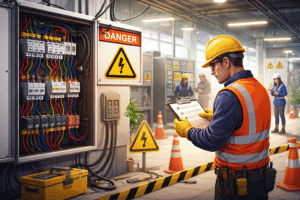
A commercial electrical inspection is more than a visual check. It is a systematic assessment of a building’s entire electrical system to ensure safety, efficiency, and compliance. Professionals examine everything from the main switchboard to individual safety devices, identifying problems before they escalate.
The process begins with a switchboard and distribution board assessment. Electricians check for loose connections, heat accumulation, aging breakers, and any components that no longer meet current standards. Since the switchboard distributes power throughout the building, any issue here can affect operations across the site.
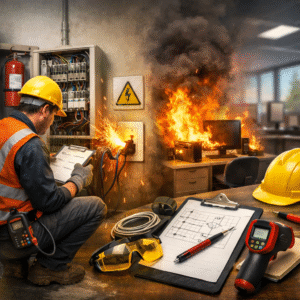
Next comes thermal imaging. Using specialized cameras, inspectors detect hotspots invisible to the naked eye. These hidden issues, such as overloaded circuits or wiring under stress, can cause equipment failure or even fires if left unresolved.
Load and power quality checks follow. Inspectors measure voltage stability, current loads, and power factor to determine whether the system is running efficiently. Poor power quality can damage sensitive equipment and increase energy bills over time.
Safety mechanism testing is also critical. Residual Current Devices (RCDs), isolators, and protective wiring are tested to confirm they trip correctly in dangerous situations, protecting both people and property.
Finally, a compliance and licensing review ensures the system meets Queensland regulations and industry standards. Many businesses discover gaps that, if left unaddressed, could lead to insurance complications or regulatory penalties.
After the inspection, businesses receive a detailed, actionable report. It clearly identifies what is safe, what requires attention, and what should be fixed immediately. The clarity of these reports allows property managers and owners to prioritize repairs and upgrades effectively.
Inspections also uncover opportunities for efficiency. Replacing outdated components, balancing loads, or upgrading equipment can reduce running costs and extend the life of electrical infrastructure. In essence, inspections provide both safety assurance and financial insight.
By addressing issues early, inspections prevent emergencies, protect investments, and keep operations running smoothly. For commercial properties, a regular inspection schedule is not optional; it is an essential part of risk management and long-term planning.
The Business Advantage of Being Proactive
Proactive electrical management transforms safety and efficiency from a reactive headache into a predictable advantage. Businesses that schedule regular inspections reduce the risk of unexpected downtime, equipment failure, and costly emergency repairs.
Routine inspections allow issues to be addressed before they escalate. A small fault discovered early can be corrected for a fraction of the cost it would take after a failure. Preventive action protects both the building and its occupants, minimizing liability and ensuring compliance with Queensland regulations.
Beyond safety, proactive inspections provide financial benefits. Detecting overloaded circuits, inefficient wiring, or outdated components allows businesses to reduce energy consumption, lower utility bills, and extend the lifespan of expensive equipment. These improvements pay for themselves over time, turning inspections into an investment rather than a cost.
Insurance and regulatory compliance are other important advantages. Properties with documented, regular inspections demonstrate diligence and responsibility. This not only helps satisfy insurance requirements but can also reduce premiums and avoid fines. In case of incidents, clear records of inspections and maintenance serve as evidence that the business took reasonable precautions.
Companies that adopt a proactive approach also gain operational continuity. Planned maintenance schedules can be coordinated to minimize disruption, avoiding unplanned shutdowns that affect employees, clients, and revenue. Knowing that the electrical system is regularly monitored provides peace of mind to management and staff alike.
Finally, choosing a reliable partner for inspections ensures expertise and accountability. Professionals can offer tailored advice, highlighting areas for improvement and providing actionable recommendations. This guidance helps businesses make informed decisions about upgrades, replacements, and safety improvements.
In short, proactive inspections:
Prevent emergencies and downtime
Reduce operational costs and energy waste
Ensure safety and compliance
Protect investments and reputation
Provide clarity and confidence for management
By prioritizing regular inspections, businesses stay ahead of potential problems, save money, and create a safer, more efficient environment. Proactive management is not just responsible; it is a smart strategy that safeguards both people and profit.
Don’t wait for a small electrical issue to turn into a costly problem. Schedule a commercial electrical inspection with ASJ Electrical Solutions today and ensure your property is safe, compliant, and future-ready. Our team of licensed professionals across Queensland provides thorough inspections, actionable reports, and peace of mind for business owners.
Contact us now at contact@asjelectricalsolutions.com.au or call +61 438 770 962 to book your inspection. Protect your business before it costs more.
One Response